
Browse Articles Online

Review Article | Open Access
Published on: 02 Mar 2026
Article ID: wjot.2026.c0205
The Truth about Hearing
The paper discusses the direct path of sound waves to the receptor, especially high frequencies. Attention was drawn to inertia in the middle and inner ear. The significance of the resonance of the longitudinal wave in the fluid with the transverse wave of the basilar membrane's natural vibrations was critically assessed. Problems related to the rocking movements of the stapes and the difference in the speed of the sound wave in the fluid and the traveling wave on the basilar membrane were…


Research Article | Open Access
Published on: 28 Feb 2026
Article ID: wjptr.2026.b2801
Impact of Chronic Mobile Phone-Induced Postural Stress on Autonomic Nervous System, Hormonal Balance, and Cognitive Fatigue: A Physiotherapy-Based Intervention Study
Background: Prolonged mobile phone use induces forward head posture (FHP), creating a bidirectional pathway linking musculoskeletal strain to neuroendocrine dysregulation and cognitive impairment. No existing global study integrates postural biomechanics, autonomic nervous system function, hormonal biomarkers, and cognitive outcomes in smartphone populations.
Objective: To investigate the multisystem impacts of chronic mobile phone-induced…

Research Article | Open Access
Published on: 28 Feb 2026
Article ID: wjptr.2026.b2802
Cervico-Thoracic Fascial Densification and Altered Force Transmission Induced by Prolonged Smartphone Use: A Multimodal Ultrasonographic, Elastographic, and Electromyographic Investigation with Targeted Physiotherapy Modulation
Background: Smartphone-related neck disorders predominantly focus on postural kinematics and muscle activation patterns. The cervico-thoracic fascial system's role in altered load transmission during prolonged mobile device use remains uncharacterized. This study investigates fascial densification, shear-strain impairment, and myofascial force transmission dysfunction in smartphone users.
Objective: To evaluate cervico-thoracic fascial…

Research Article | Open Access
Published on: 28 Feb 2026
Article ID: wjptr.2026.b2803
Association of Study Posture Variability, Backpack Carrying Pattern, Late Night Study Habits, and Study Break Frequency with Musculoskeletal Discomfort and Fatigue Among Students: An Observational Study
Background: Musculoskeletal discomfort among students has become increasingly prevalent due to prolonged sitting, poor postural habits, and demanding academic schedules. However, limited evidence exists on the combined influence of postural variability, backpack carrying patterns, late night study habits, and break frequency on these outcomes.
Objective: This study aimed to investigate the association between study posture variability, backpack…

Research Article | Open Access
Published on: 28 Feb 2026
Article ID: wjda.2026.b2804
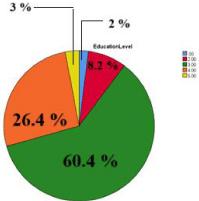
Perceived Education-Job Mismatch in Nigeria: Prevalence, Moderators and Outcomes
Perceived Education-job mismatch is an individual's subjective belief that their education or degree does not align with the requirements of their job. This research aims to investigate the association between education-job mismatch and two groups of individual and workplace outcomes in Nigeria. A second aim also is to test the extent to which these associations can be moderated by personality traits and employability. A sample of 303 (64.7% male and 35.3% female) graduates from Nigeria were…

Review Article | Open Access
Published on: 26 Feb 2026
Article ID: wjmd.2026.b2601
Multimodal Biomechanical, Neuromuscular, and Sensorimotor Alterations Associated with Prolonged Smartphone Use and Their Response to Targeted Physiotherapy Intervention
Smartphone use has emerged as a significant risk factor for cervical musculoskeletal dysfunction, yet the integrated mechanistic pathways remain inadequately characterized. This study examined the temporal relationship between smartphone exposure and biomechanical, neuromuscular, and sensorimotor alterations in the cervical spine, coupled with physiotherapy-driven recovery mechanisms. We conducted a prospective, randomized controlled trial with 94 asymptomatic to minimally symptomatic…

Research Article | Open Access
Published on: 26 Feb 2026
Article ID: wjmd.2026.b2602
Comparative Effectiveness of Intermittent Neuromuscular Electrical Stimulation Versus High-Fruit-and-Vegetable Dietary Intervention as Complementary Therapies in Cervicogenic Headache Management: A Randomized Controlled Trial with Mechanistic Outcomes
Cervicogenic Headache (CGH), originating from cervical musculoskeletal dysfunction and associated neuropathological cascades, represents a significant clinical burden affecting 2.5-4.1% of the global population with limited evidence-based complementary intervention strategies. This randomized controlled trial evaluated the comparative effectiveness of Intermittent Neuromuscular Electrical Stimulation (INES) versus High Fruit-and-Vegetable (HFV) dietary intervention as adjuncts to standard…

Case Report | Open Access
Published on: 26 Feb 2026
Article ID: wjprm.2026.b2603
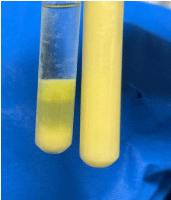
Empyema Superimposed on Pseudochylothorax: A Report of a Rare Case
Background: Pseudochylothorax is an uncommon chronic pleural effusion characterized by elevated pleural cholesterol levels and typically associated with long-standing pleural inflammation, most commonly Rheumatoid Arthritis (RA) and tuberculosis. Although usually sterile, secondary infection may rarely complicate the condition, particularly in immunocompromised patients, posing diagnostic and therapeutic challenges.
Case: A 54-year-old man with…

Research Article | Open Access
Published on: 23 Feb 2026
Article ID: wjd.2026.b2301
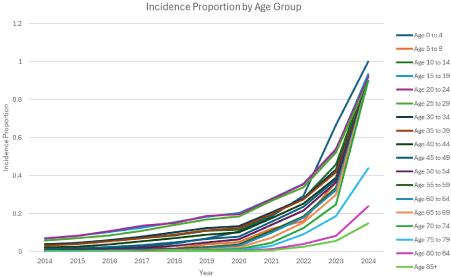
Demography, Incidence, Prevalence, and Comorbidities in Hidradenitis Suppurativa: Insights from a Large-Scale Database Analysis
Background and Aims: Hidradenitis suppurativa (HS) is a chronic inflammatory skin disease characterized by painful nodules, abscesses, and draining tunnels in intertriginous regions. Despite extensive research since its description in 1854, the global prevalence remains highly variable (0.053%-4.1%), with notable disparities across demographic groups. This study examines demographic patterns and prevalence trends of HS in the United States to inform targeted public health…

Opinion | Open Access
Published on: 23 Feb 2026
Article ID: wjptr.2026.b2302
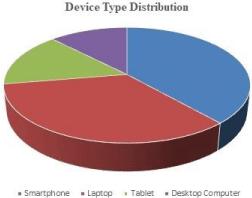
Prevalence of Early Musculoskeletal Discomfort Related to Digital Device Multi-Tasking and Ergonomic Practices in College Students
Background: The increased and rapid use of digital devices puts college students into a state of prolonged screen time, multi-tasking behaviors, and poor ergonomics practices, leading to early musculoskeletal discomfort. Early symptoms need to be identified to help avoid long-term musculoskeletal disorders.
Objective: To ascertain the prevalence of early musculoskeletal discomfort associated with digital device multi-tasking and ergonomic…