
Browse Articles Online
Review Article | Open Access
Published on: 22 Jan 2026
Article ID: wjptr.2026.a2206
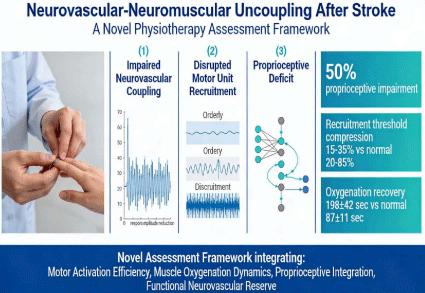
Neurovascular–Neuromuscular Uncoupling After Stroke: Physiological Effects on Motor Recovery and a Novel Physiotherapy-Based Physical Examination Framework
Background: Current stroke rehabilitation focuses on motor output parameters (strength, spasticity, motor recovery) without directly assessing neurovascular–neuromuscular coupling (NMC)—the synchronization between neural drive, muscle activation, and local blood flow. Emerging neuroscience indicates that impaired microvascular perfusion–muscle activation coupling represents a fundamental pathophysiological mechanism limiting motor recovery post-stroke, yet no standardized…


Review Article | Open Access
Published on: 22 Jan 2026
Article ID: wjptr.2026.a2207
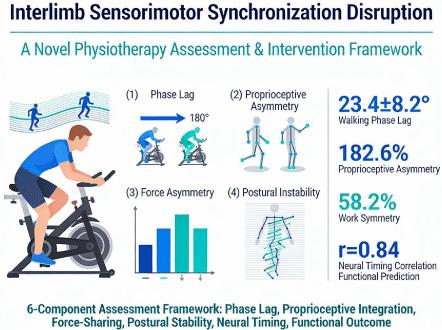
Disruption of Interlimb Sensorimotor Synchronization After Stroke: Physiological Mechanisms, Physical Examination Innovation, And Global Physiotherapy Intervention Models
Background: Current stroke rehabilitation treats limbs largely independently, despite mounting evidence that bilateral sensorimotor synchronization—the coordinated temporal and spatial control of bilateral limb movement—represents a core physiological requirement for functional recovery. No standardized physiotherapy assessment quantifies interlimb phase lag, bilateral proprioceptive integration, or force-sharing asymmetry as measurable physiological…

Case Series | Open Access
Published on: 22 Jan 2026
Article ID: wjed.2026.a2208
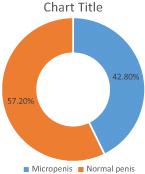
Testicular Regression Syndrome: A Series of 7 Cases
Introduction: Testicular regression syndrome (TRS) is a rare cause of disorders of sex development in 46,XY individuals. It corresponds to the partial or complete disappearance of testicular tissue following initially normal male differentiation.
Objective: To describe the clinical, biological, radiological, and evolutionary characteristics of a series of 7 patients followed for TRS, and to compare them with recent literature…

Research Article | Open Access
Published on: 22 Jan 2026
Article ID: wjan.2026.a2209
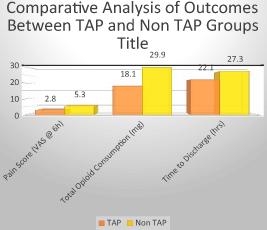
Assessing the Benefits of Standardizing Transversus Abdominis Plane (TAP) Block in Laparoscopic Surgeries: A Retrospective Study
Background: Effective postoperative pain control is a key determinant of recovery following laparoscopic surgery. Transversus Abdominis Plane (TAP) block is widely used as part of multimodal analgesia to reduce postoperative pain and opioid consumption. However, real world evidence comparing analgesic outcomes associated with TAP block use in routine clinical practice remains limited.
Aim: To assess the association between the use of TAP block…

Research Article | Open Access
Published on: 22 Jan 2026
Article ID: wjacs.2026.a2210
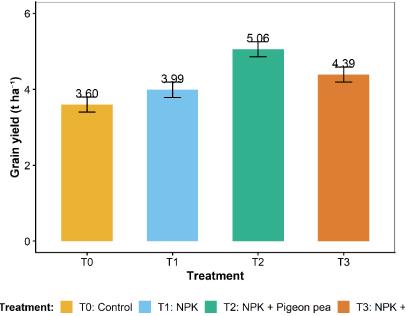
Integrated Use of Pigeon Pea Residues and Mineral Fertilizers Enhances Rainfed Rice Productivity and Soil Health in a Humid Forest Zone
Sustainable intensification of rainfed rice systems in sub-Saharan Africa is constrained by low soil fertility and limited access to mineral fertilizers. Integrated nutrient management that combines organic and mineral sources offers a promising pathway to enhance productivity and soil health. A field experiment was conducted in Nkolbisson, Cameroon, to evaluate the effects of pigeon pea (Cajanus cajan L.) biomass and mineral fertilizers on the growth, yield, and soil properties of rainfed…

Case Report | Open Access
Published on: 17 Jan 2026
Article ID: wjprm.2026.a1701
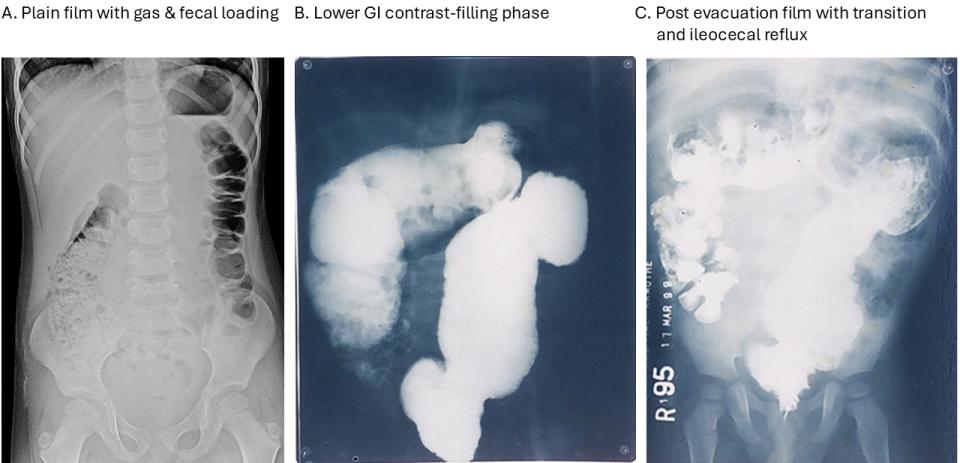
Recurrent Respiratory Tract Infections and Pneumonia in a 4‑Year‑Old Girl with Unrecognized Hypoganglionosis Successfully Treated with Transanal Endosurgical Modified Anorectal Myomectomy
We report a 4‑year‑old girl with recurrent respiratory tract infections and multiple episodes of pneumonia. Despite repeated hospital admissions, the underlying cause remained elusive until severe fecal retention was identified as a contributing factor. Further evaluation revealed previously unrecognized hypoganglionosis. Imaging demonstrated massive fecal loading with diaphragmatic elevation. Rectal biopsies confirmed reduced ganglion cell density consistent with hypoganglionosis. The…

Case Report | Open Access
Published on: 17 Jan 2026
Article ID: wjc.2026.a1702
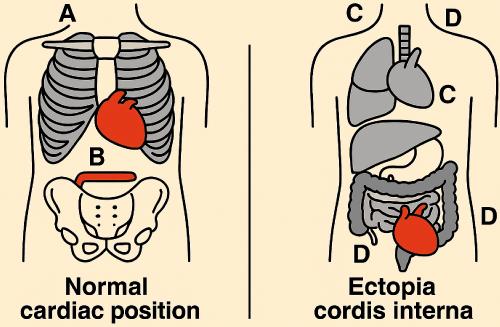
Ectopia Cordis Interna in an Asymptomatic Adult Male: A Rare Case Report
Ectopia cordis is a rare congenital malformation in which the heart is partially or completely located outside the thoracic cavity. Most cases present in infancy with severe cardiorespiratory compromise. We report an exceptionally rare presentation of ectopia cordis interna, in which a structurally normal heart is located entirely within the upper abdomen, discovered incidentally in an asymptomatic young adult male undergoing evaluation for a respiratory infection. This case highlights the…


Research Article | Open Access
Published on: 17 Jan 2026
Article ID: wjsmp.2026.a1703
Eating Disorders among University Students: Prevalence and Socioeconomic, Behavioural, and Health Correlates
Background: Eating disorders (EDs) are complex mental health conditions that can significantly impair physical and psychosocial functioning, and University students are considered a high-risk group. Limited studies have explored the prevalence and associated factors of EDs among university students in Malaysia.
Objective: To determine the prevalence of eating disorders and identify associated factors among university…

Mini Review | Open Access
Published on: 17 Jan 2026
Article ID: wjpbs.2026.a1704
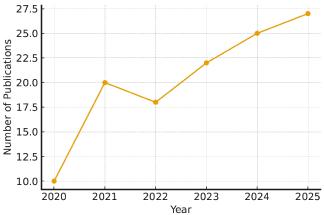
Systematic Review to Assess Peer Support Efficacy in Mental Health Recovery
Background: Peer support is becoming recognised as a key element of recovery-oriented mental health care due to growing evidence of its beneficial benefits on hope, empowerment, and social connectivity. However, there is ongoing disagreement over its therapeutic effectiveness and system level integration.
Objective: Analysis of the studies on peer support interventions in mental health recovery was carried out through latest research studies…

Case Series | Open Access
Published on: 17 Jan 2026
Article ID: wjed.2026.a1705
Symptomatic Rathke’s Cleft Cyst: A Series of Five Cases and Review of the Literature
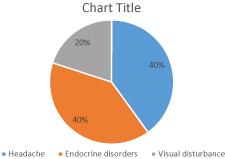
Introduction: Rathke’s cleft cyst (RCC) is a rare benign cystic lesion of the sellar region arising from an embryonic remnant of Rathke’s pouch. Although often asymptomatic, it may become responsible for endocrine, neurological, or ophthalmological manifestations when it is large or compressive.
Objective: To describe the clinical, hormonal, radiological, therapeutic, and evolutionary characteristics of symptomatic Rathke’s cleft cysts through a…