Archived Articles

Case Report | Open Access
Published on: 23 Feb 2026
Article ID: wjptr.2026.b2307
Comparative Effectiveness of Intermittent Neuromuscular Versus Dietary Intervention (Fruits and Vegetables) as Complementary Interventions in a Patient with Cervicogenic Headache: A Case Study
Background: Cervicogenic Headache (CGH) is a symptomatic headache disorder originating from cervical spine musculoskeletal impairment in functional capacity. Complementary investigations, such as Intermittent Neuromuscular Technique (INMT) and nutrition-based interventions, may provide additional clinical benefits.
Objective: To assess and contrast the clinical effectiveness of INMT vs nutritional impairments prioritising nutrient consumption of…

 DOI: 10.5281/zenodo.18829662 »
Systematic Review | Open Access
Published on: 23 Feb 2026
Article ID: wjptr.2026.b2308
A Study on the Role of Intermittent Neuromuscular Technique Versus Nutritional Intervention (Fruits and Vegetables) Along with Conservative Management in Patients with Cervicogenic Headache: A Systematic Review
Background: Cervicogenic Headache (CGH) is a symptomatic headache condition. Causing from, cervical segmental dysfunction, suboccipital muscle hypertoxicity and neuromuscular dysfunction. Non-invasive treatment including, physiotherapy, postural education, and pharmacotherapy treatment, is extensively utilizes, however complementary strategies, may improve outcomes. This systematic review assesses the comparative effectiveness, in Intermittent Neuromuscular Technique (INMT)…

Case Report | Open Access
Published on: 14 Feb 2026
Article ID: wjptr.2026.b1401
Fascia-Oriented Clinical Pilates in Myalgic Encephalomyelitis/Chronic Fatigue Syndrome with Multisystem Post-Vaccination Sequelae: A Retrospective Case Report
Myalgic Encephalomyelitis/Chronic Fatigue Syndrome (ME/CFS) is a complex, chronic, multisystem disorder characterized by persistent fatigue, post-exertional malaise, autonomic dysfunction, neuromuscular impairment, and cognitive disturbances. Standard rehabilitation approaches are often poorly tolerated due to symptom exacerbation, highlighting the need for safe, individualized, low-load interventions. Clinical Pilates (CP), emphasizing controlled movement, core stabilization, alignment, and…

Research Article | Open Access
Published on: 14 Feb 2026
Article ID: wjptr.2026.b1402
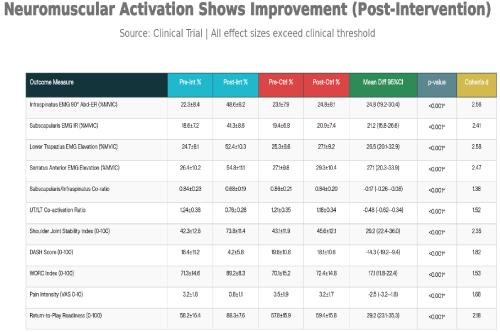
Neuromuscular Adaptations of the Rotator Cuff and Scapular Stabilizers Following TheraBand-Based Throwing Training in Symptomatic Volleyball Players with Shoulder Internal Rotation Deficit: A Randomized Controlled Trial
Background: Glenohumeral internal rotation deficit (GIRD) rehabilitation literature lacks comprehensive neuromuscular analysis explaining motor control mechanisms underlying elastic resistance training effectiveness. Current evidence emphasizes range of motion and pain outcomes without addressing rotator cuff and scapular stabilizer activation patterns or co-contraction dynamics essential to shoulder stability.
Objective: This randomized…

Research Article | Open Access
Published on: 14 Feb 2026
Article ID: wjptr.2026.b1403
Effectiveness of Theraband-Based Throwing Exercise in Volleyball Players with Symptomatic Glenohumeral Internal Rotation Deficit: A Randomized Control Trial
Background: Glenohumeral internal rotation deficit (GIRD) is prevalent in overhead athletes, particularly volleyball players, contributing to shoulder pain and functional limitation during throwing activities. Theraband-based throwing exercises have demonstrated potential for rotator cuff retraining, yet their efficacy in symptomatic athletes requires rigorous evaluation.
Objectives: This randomized controlled trial evaluated the effectiveness of…

Research Article | Open Access
Published on: 14 Feb 2026
Article ID: wjptr.2026.b1404
Prevalence of Respiratory Complications in Chronic Kidney Disease Patients: A Cross-sectional Study
Background: Respiratory complications are increasingly recognized as significant comorbidities in chronic kidney disease (CKD) patients, yet their prevalence and clinical characteristics remain inadequately documented in the Indian population.
Objectives: This study aimed to determine the prevalence, types, and severity of respiratory complications in CKD patients across different disease stages and to identify the association between kidney…

Research Article | Open Access
Published on: 14 Feb 2026
Article ID: wjptr.2026.b1405
Comparative Study on the Role of Physiotherapy in Antenatal and Postnatal Women for Musculoskeletal Symptoms Management: A Scientific Perspective
Background: Pregnancy and childbirth induce profound physiological, hormonal, and biomechanical changes that frequently result in musculoskeletal discomfort, reduced physical fitness, and pelvic floor dysfunction. Evidence suggests that approximately 50-70% of pregnant women experience pregnancy-related musculoskeletal disorders, with lower back pain being the most prevalent. Antenatal and postnatal physiotherapy has emerged as a scientifically supported, cost-effective…


Opinion | Open Access
Published on: 07 Feb 2026
Article ID: wjptr.2026.b0710
An Analysis of Soleus Muscle Tightness and Intrinsic Foot Muscle Weakness in Individuals with Flatfoot – A Cross Sectional Study
Background: Flat foot is related with modified foot biomechanics, where intrinsic foot muscle weakness and calf muscle tightness, particularly of the soleus muscle are deemed assisting factors. Understanding the relationship between these variables may and in better assessment and rehabilitation strategies for individuals with flatfoot.
Objective: To analyze the relationship between intrinsic foot muscle strength, soleus muscle tightness in…

Research Article | Open Access
Published on: 29 Jan 2026
Article ID: wjptr.2026.a2905
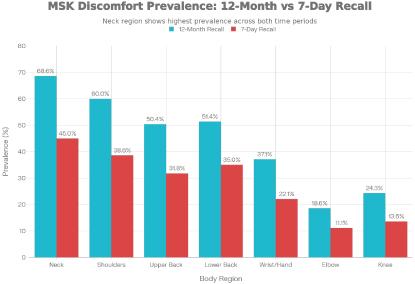
Ergonomic Risk Factors and Musculoskeletal Discomfort in College Students: A Cross-Sectional Observational Study
Background: Prolonged digital device use among college students is increasingly associated with musculoskeletal discomfort, yet comprehensive studies examining ergonomic practices, multitasking behavior, and symptom prevalence remain limited in undergraduate populations.
Objective: This study examined the prevalence of musculoskeletal discomfort and associations with ergonomic practices and digital device multitasking in college…

Case Report | Open Access
Published on: 22 Jan 2026
Article ID: wjptr.2026.a2205
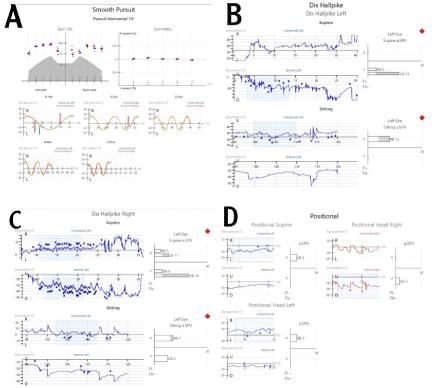
Canalith Repositioning Maneuvers with Vestibular Rehabilitation for Bilateral Posterior Canal BPPV Secondary to Otitis Media in an Older Adult: A Case Report
Benign Paroxysmal Positional Vertigo (BPPV) is the most common peripheral vestibular disorder and is especially prevalent among older adults. While most cases are idiopathic, secondary BPPV following otitis media has gained increasing recognition. This case report describes a 63-year-old female with bilateral posterior canal BPPV involving mixed mechanisms(Right-sided cupulolithiasis and left-sided canalithiasis) occurring one year after medically treated otitis media. The diagnosis was…