Recently Published Articles

Letter to Editor | Open Access
Published on: 25 Jul 2026
Article ID: wjptr.2026.g2505
Letter to the Editor -"Effectiveness of Multimodal Ergonomic Interventions Versus Standard Postural Education for Smartphone-Related Postural Dysfunction: A Three-Arm Randomized Controlled Trial"
We read with considerable interest the three-arm randomized controlled trial (RCT) by Muthukrishnan and Rajadurai (2026) comparing Multimodal Ergonomic Intervention (MEI), Wearable Posture Biofeedback Training (WPBT), and Standard Postural Education (SPE) for smartphone-related postural dysfunction (SRPD). The study addresses a clinically significant and growing public health burden, and the authors are commended for their prospective CTRI registration, assessor-blinding, and…

 DOI: 10.5281/zenodo.21742223 »
Research Article | Open Access
Published on: 23 Jul 2026
Article ID: wjptr.2026.g2306
Innovations in Blood Pressure Monitoring: Physical Therapists' Acceptance of Smartwatch for Patient Self Monitoring
Blood pressure (BP) monitoring is a vital component of cardiovascular health assessment, yet its routine use is often hindered by accessibility issues and reliance on traditional instruments typically used by medical professionals. This study aimed to assess the acceptance of BP-monitoring smartwatches (wearable devices) among licensed Physical Therapists in Laguna, Philippines.
A quantitative descriptive research design was utilized, with data collected through an online survey…

Research Article | Open Access
Published on: 19 Jun 2026
Article ID: wjptr.2026.f1901
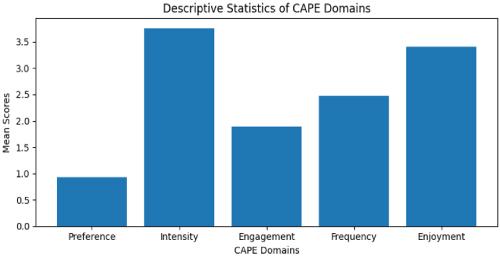
Game Na! Unpacking the Play Preferences and Social Participation of School-Age Children Diagnosed with Attention-deficit/hyperactivity disorder (ADHD) and Autism Spectrum Disorder (ASD)
This study examined the social participation and activity preferences of school-aged children diagnosed with Attention-Deficit/Hyperactivity Disorder (ADHD) and Autism Spectrum Disorder (ASD) using the Children’s Assessment of Participation and Enjoyment (CAPE) and Preferences for Activities of Children (PAC). A quantitative comparative-correlational cross-sectional design was utilized involving 55 children aged 6–12 years receiving occupational therapy services in Metro Manila, Philippines.…

Research Article | Open Access
Published on: 11 Jun 2026
Article ID: wjptr.2026.f1101
The Effectiveness of Waltz Dance in Improving Balance Performance and Reducing Risk of Falls in Older Adult Community Dwellers
This study aimed to determine the effectiveness of a waltz dance program in improving balance performance and reducing the risk of falls among older adult community dwellers in Barangay 399, Sampaloc, Manila. A Single Subject Research Design (SSRD) was utilized involving 2-3 participants aged 60–85 years old who met the inclusion criteria. Balance performance and fall risk were measured using the Short Physical Performance Battery (SPPB) before and after the interventions. Participants first…

Research Article | Open Access
Published on: 11 Jun 2026
Article ID: wjptr.2026.f1103
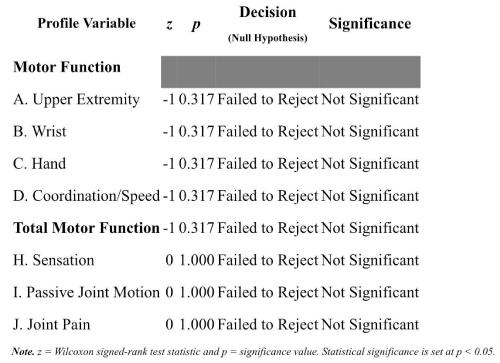
Effectiveness of Smart Music Boxing Machine in Improving Upper Extremity Coordination in Patients with Chronic Stroke
This study examined the effectiveness of the Smart Music Boxing Machine in improving upper extremity coordination among patients with chronic stroke. Utilizing a quasi-experimental one-group pre-test and post-test design, the research quantitatively assessed changes in motor performance using the Fugl-Meyer Assessment for Upper Extremity (FMA-UE). The intervention integrated rhythmic auditory stimulation and repetitive boxing movements to enhance motor coordination and engagement.…

Research Article | Open Access
Published on: 06 Jun 2026
Article ID: wjptr.2026.f0603
The Effects of Robotic Hand Gloves on Hand Range of Motion of Chronic Stroke Patients (2024-2025)
Chronic stroke patients experience persistent upper limb impairments that limit hand function resulting in reduced quality of life and overall independence in ADLs. Soft robotic hand gloves may improve hand Range Of Motion (ROM) by promoting motor learning and neuroplasticity. A descriptive-correlational pre-test and post-test study was used in this study. The participants were composed of 20 chronic stroke patients aged 55-65 years from Metro Manila - selected through a purposive sampling…

Research Article | Open Access
Published on: 25 May 2026
Article ID: wjptr.2026.e2501
Randomized Controlled Study of IASTM vs. SHAM Treatment in Alleviating Symptoms Associated with Upper Trapezius Myofascial Trigger Points
Instrument-assisted soft tissue mobilization (IASTM) is widely used and compared with other therapeutic interventions. However, limited evidence exists comparing IASTM with sham treatment in the Philippines, which hinders the ability to determine observed therapeutic outcomes attributable to the specific physiological effects of IASTM or to placebo-related responses. To address this gap, this study investigates the effects of IASTM vs sham treatment in alleviating the symptoms of upper…

Research Article | Open Access
Published on: 25 May 2026
Article ID: wjptr.2026.e2502
Traditional Filipino Games as Therapeutic Tools: Boosting Lower Extremities Gross Motor Skills in Children with Autism Spectrum Disorder
Motor dysfunction in children with Autism Spectrum Disorder (ASD) significantly complicates daily activities and contributes to social-behavioral challenges. While standard therapies are effective, they often lack cultural relevance or accessibility in low-resource settings. This study scrutinized the therapeutic potential of traditional Filipino games—specifically Piko and Patintero— as culturally grounded interventions to enhance lower extremity gross motor skills. Utilizing a quantitative…

Research Article | Open Access
Published on: 25 May 2026
Article ID: wjptr.2026.e2504
Vestibular Rehabilitation Therapy and Its Effect on Positional Tolerance among Employees with Vestibular Symptoms
Vestibular symptoms are one of the most commonly complained impairments. This includes motion sensitivity which accounts for positional tolerance — the capacity to maintain and alter head and body postures without the feeling of symptoms of dizziness, nausea, or even vomiting. On the other hand, Vestibular Rehabilitation Therapy (VRT) is an approach to treat vestibular dysfunction and improve functional outcomes for patients with vestibular disorders. This study used a single group pre-test,…

Research Article | Open Access
Published on: 25 May 2026
Article ID: wjptr.2026.e2505
Effectiveness of Exergames Using Nintendo Switch Sports for Rehabilitation with Stage 3 Frozen Shoulder
This study examined the effectiveness of exergames rehabilitation using the Nintendo Switch Sports in the rehabilitation of patients diagnosed with Stage 3 Frozen Shoulder, also known as Adhesive Capsulitis. The participants consisted of 10 individuals of all genders who were medically diagnosed with Frozen Shoulder and were undergoing rehabilitation. A randomized controlled trial was employed to compare outcomes between the control and experimental groups data was collected using the…